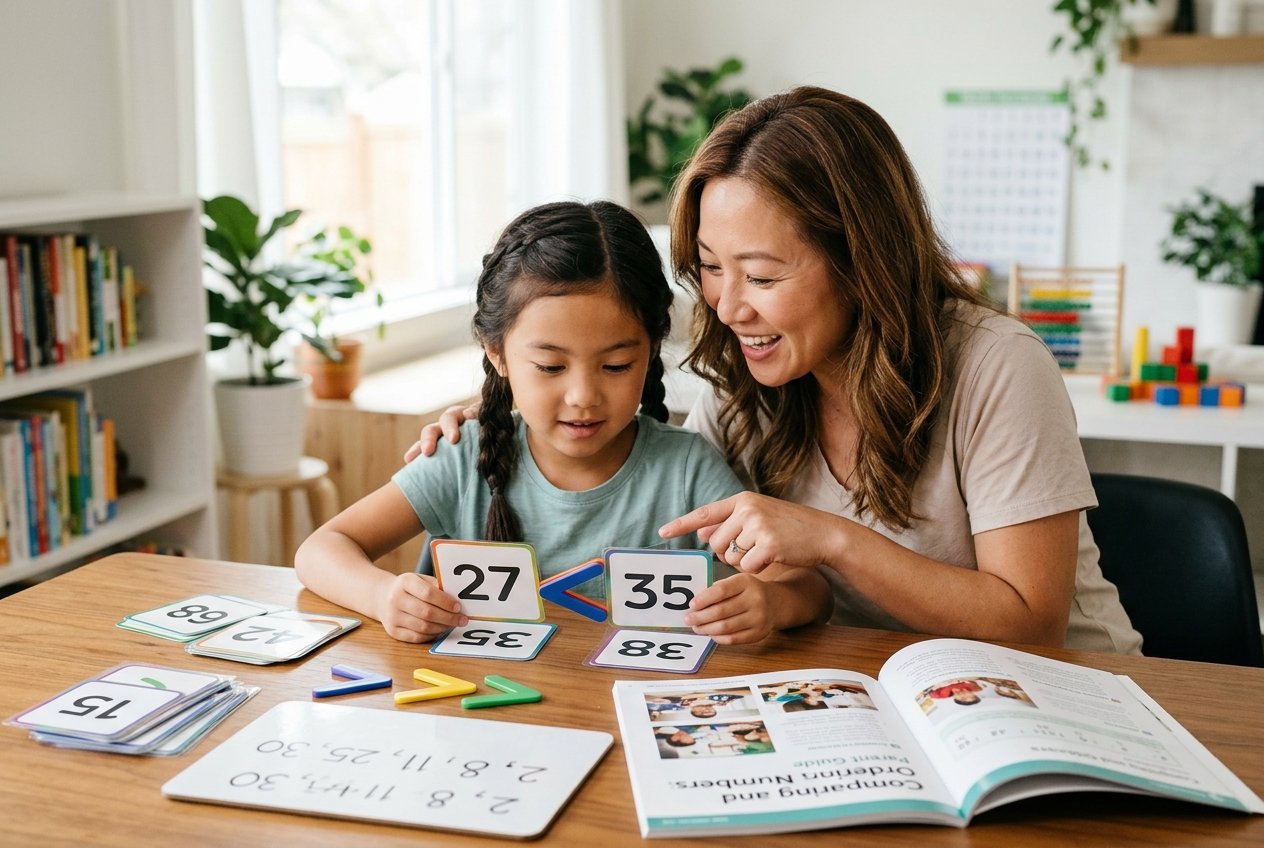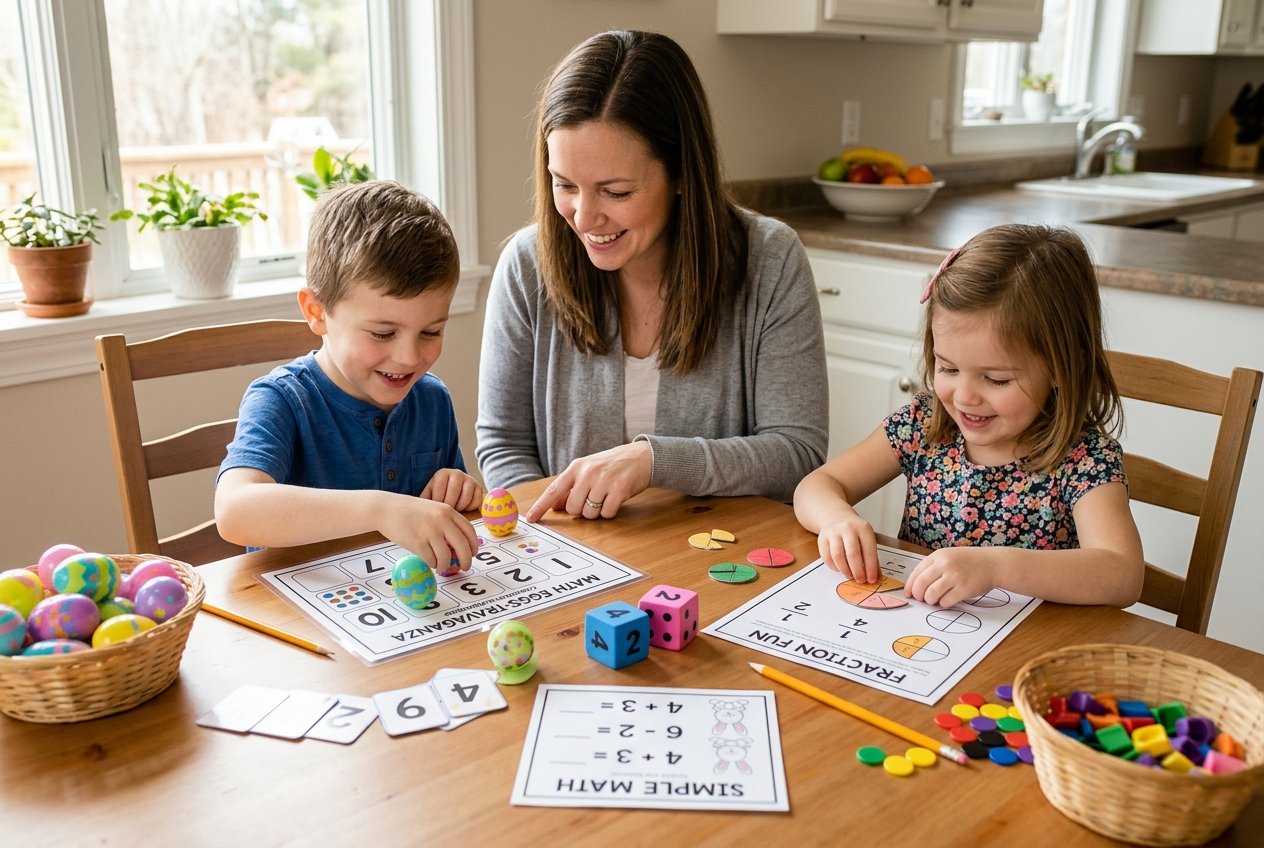
Math Enrichment for Gifted Kids: Parent Guide

Math enrichment gifted kids need is rarely another page of faster arithmetic. If your child finishes school math quickly, asks questions that jump three chapters ahead, or turns simple homework into a “but why?” investigation, the answer is not to bury them in busywork. The answer is richer mathematics: puzzles, patterns, strategy, proof, games, projects, and the right amount of acceleration. The aim is to keep curiosity alive while protecting the child from perfectionism, boredom, and the lonely feeling of being “the math kid.”
This guide gives parents a practical way to support advanced learners at home. It leans on the idea from the National Council of Teachers of Mathematics that fluency should include flexibility and understanding, not only speed. Gifted children often move quickly, but speed is not the whole story. A child who can calculate fast still deserves opportunities to reason slowly, explain clearly, struggle productively, and discover that mathematics is bigger than worksheets.
📺 Video Guide
Math Enrichment Gifted Kids Actually Need
Enrichment means depth, not just more. A gifted child who already understands multiplication does not need twenty extra multiplication worksheets as a reward for finishing early. They might need a puzzle about why the product of two odd numbers is always odd, a challenge to design a fair scoring system, or a project that connects fractions to music. The Davidson Institute notes that mathematically gifted students often need curriculum adjustments because the regular pace may not match their readiness.
Think of enrichment in three lanes. First, go deeper into the same topic: prove, explain, compare methods, or create examples. Second, go wider into related ideas: logic, combinatorics, geometry, statistics, coding, or financial math. Third, go upward when readiness is clear: advanced material, competitions, math circles, or accelerated courses. Good enrichment uses all three, but not all in the same week.
For young children, the NAEYC math resources are a reminder that mathematical thinking grows through play, talk, and hands-on exploration. Gifted does not mean a child must become miniature adult. They still need joy, movement, drawings, blocks, stories, mistakes, and time to wonder. The best enrichment feels like a door opening, not a treadmill speeding up.
✓ Strong Enrichment Signals
- ✓ The child asks why a rule works, not only what the answer is
- ✓ They invent shortcuts and want to test them
- ✓ They enjoy puzzles with no obvious first step
- ✓ They become bored by repetition but energised by challenge
- ✓ They like explaining patterns to other people
Start With Challenge, Not Pressure
Gifted math learners are often praised for being quick. That praise can backfire. If a child builds an identity around being fast, then a hard problem can feel like a threat. A healthier message is: “You are the kind of learner who can stay with interesting problems.” Resources from Youcubed are useful here because they frame mistakes as part of brain growth and mathematical creativity, not evidence that a child has lost their gift.
At home, separate challenge from performance. Challenge says, “This may take a while, and that is the point.” Pressure says, “You should know this because you are good at math.” The first builds resilience. The second creates anxiety. When your child hits a wall, praise the strategy they tried, ask what information the mistake gives, and take a short break if frustration rises too quickly.
A simple routine works well: one warm-up they can do easily, one rich problem that may take several attempts, and one reflection question. If you want printable practice for a specific skill before a richer challenge, MathSpark can generate grade-appropriate worksheets in seconds, including Greek curriculum practice and Pythagoras Exams-style reasoning. Use it as targeted support, not as a stack of extra chores.
💡 Best parent sentence
Try saying: “This problem is supposed to make you think, not prove you are smart in five seconds.” It lowers the emotional temperature immediately.
Use Rich Problems and Math Puzzles
Rich problems have multiple entry points, more than one possible strategy, and room for explanation. Sites like NRICH are excellent because many tasks are designed for exploration rather than quick answer-getting. A gifted child might solve the first version quickly, then extend it: What if the numbers change? Can you find all possibilities? Can you prove none are missing?
Interactive environments also help. Mathigon presents mathematics through visual, interactive lessons that can spark curiosity beyond the school sequence. Khan Academy can support acceleration when a child wants to preview a new topic, but it works best when paired with discussion and problem solving rather than passive video watching.
Try a weekly puzzle night. Choose one problem from logic, one from number theory, and one from geometry. Let the child pick. Keep a notebook of strategies: draw a diagram, try smaller cases, make a table, work backwards, look for symmetry, or explain to someone else. This strategy notebook becomes more valuable than any single answer.
Acceleration vs Enrichment
Acceleration means moving into higher-level content earlier. Enrichment means exploring ideas more deeply or broadly. Advanced children may need both, but they solve different problems. If a child is bored because the class is repeating material they mastered months ago, acceleration may be appropriate. If a child is fast but has gaps in explanation, enrichment may be better first. The Common Core math progressions show how topics build over time, which can help parents see whether a child is ready to move ahead or needs a stronger bridge.
Competition pathways are another form of enrichment. Art of Problem Solving is known for contest-style reasoning and challenging curricula. It can be fantastic for the right child, but do not treat competitions as the only valid route. Some gifted kids thrive on contests; others prefer projects, coding, geometry art, statistics, or explaining ideas to younger siblings.
A good test is energy. After an enrichment activity, does your child seem stretched but alive? Or depleted and tense? Advanced learning should include effort, but not chronic dread. If the only emotion around advanced math is fear of disappointing adults, the plan needs adjustment.
📝 Use the two-week test
Try any new enrichment routine for two weeks. Keep it if curiosity and confidence rise. Change it if arguments, avoidance, or perfectionism increase.
A Simple Weekly Plan for Parents
Monday can be skill support: choose one school topic and make sure foundations are solid. Tuesday can be a rich problem. Wednesday can be a visual or hands-on activity: build a fractal, design a board game, measure shadows, or graph sports statistics. Thursday can be independent exploration with a book, website, or short video. Friday can be reflection: what was surprising, what strategy worked, and what question should we chase next?
The Stanford DREME network encourages family math talk, and gifted children benefit from that talk just as much as struggling learners do. Ask questions at dinner: Is this game fair? How many routes can we take? What pattern do you notice in the calendar? Which estimate is reasonable? These conversations show that mathematics lives in ordinary decisions, not only in textbooks.
Keep sessions short. Twenty focused minutes can be enough. Gifted children may have high ability, but they are still children with limited emotional bandwidth. If school has already drained them, choose a puzzle conversation instead of a formal lesson. Consistency matters more than intensity.
Internal Links for a Stronger Learning Path
If your child loves challenge, start with math puzzles for critical thinking and then connect those strategies to problem solving strategies for kids. If they enjoy contests, read the guide to math competition preparation before signing up for anything. And if confidence is fragile, revisit growth mindset in math so the emotional foundation stays strong while the academic level rises.
The goal is not to create a packed schedule. The goal is a learning ecosystem: targeted practice when needed, rich problems for depth, broader projects for curiosity, and enough rest that math stays connected to joy. The Education Endowment Foundation emphasises representations, discussion, and purposeful practice in maths teaching. Those principles work beautifully at home too.
When to Ask the School for More
If your child is consistently finishing work early, teaching themselves future chapters, or becoming disruptive because the work is too easy, document it. Collect examples of completed work, questions they ask, and independent projects. Resources such as Hoagies Gifted Education Page can help parents understand common gifted education terms before a school meeting.
Ask for specifics rather than labels. Could the teacher offer compacted assignments? Could your child join a higher math group for one unit? Is there a math club, competition, or independent project option? Could pre-assessment show what they already know? Schools vary widely, but a concrete request is easier to support than a general statement that the child is bored.
Also watch for twice-exceptional patterns. A child can be advanced in mathematical reasoning and still struggle with handwriting, attention, processing speed, or anxiety. In that case, enrichment should reduce friction, not add more. A voice explanation, oral proof, digital workspace, or project format may reveal thinking that a worksheet hides.
⚠️ Disclaimer
This article is educational guidance for June 2026. It is not a gifted identification assessment or a substitute for advice from your child’s teacher, psychologist, or school support team. Use it as a practical starting point and adapt it to your child’s age, temperament, curriculum, and wellbeing.
Frequently Asked Questions
Is enrichment the same as acceleration?
No. Enrichment adds depth and breadth; acceleration moves into later content sooner. Many gifted children need a thoughtful mix of both.
Should gifted kids skip grades in math?
Sometimes, but not automatically. Readiness, emotional fit, gaps, and school structure all matter. Start with evidence from work samples and teacher input.
What if my child hates repetitive practice?
Reduce repetition, but do not remove foundations. Use short targeted practice, then move into puzzles, projects, or applications.
Are math competitions necessary?
No. They are useful for some children, but rich projects, math circles, coding, games, and independent investigations can be equally valuable.
How do I avoid pressuring my gifted child?
Praise persistence, strategy, and curiosity more than speed or being smart. Keep enrichment joyful and stop before challenge turns into chronic stress.