Math Manipulatives: Best Tools for Hands-On Learning
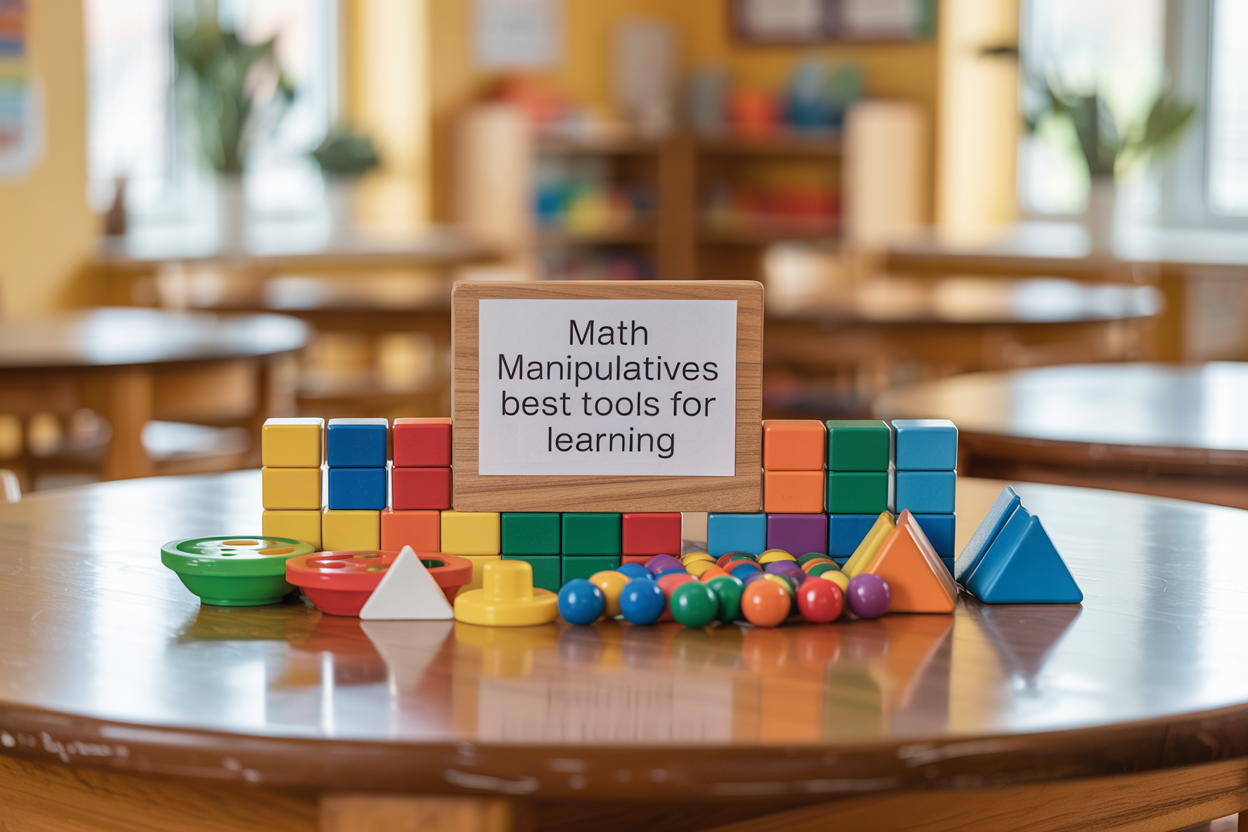
Your child stares at a worksheet full of numbers and freezes. Sound familiar? For many kids, math feels abstract and disconnected from anything real. That’s where math manipulatives come in. These hands-on tools turn invisible concepts into something children can touch, move, and figure out on their own. Research from the National Council of Teachers of Mathematics (NCTM) consistently supports the use of physical materials in math instruction, especially for elementary-aged learners.
In this guide, we’ll walk through the best math manipulatives for kids, explain how each one works, and help you pick the right tools for your child’s grade level. Whether you’re a parent helping with homework or a teacher stocking your classroom, you’ll find practical options here that actually make a difference.
📺 Video Guide
What are math manipulatives and why do they work?
Math manipulatives are physical objects that represent mathematical ideas. Blocks, beads, tiles, coins, dice. Anything a child can hold and rearrange to understand a concept counts. The idea is simple: before kids can think about numbers in the abstract, they need to experience them concretely.
This approach follows what educators call the Concrete-Representational-Abstract (CRA) framework. A study published in the Journal for Research in Mathematics Education found that students who used manipulatives outperformed those who didn’t, particularly in problem solving and retention. Children build a mental model of how numbers behave when they physically group, split, and rearrange objects.
The National Association for the Education of Young Children (NAEYC) recommends hands-on math exploration as a core part of early childhood learning. And it’s not just for little kids. Manipulatives help older students grasp fractions, algebra concepts, and geometry too.
Base ten blocks: the backbone of place value
If you buy one manipulative, make it base ten blocks. These sets include small unit cubes (ones), rods (tens), flats (hundreds), and large cubes (thousands). Kids physically trade ten ones for a ten-rod, which makes regrouping in addition and subtraction click in a way that no amount of explaining can match.
Base ten blocks are used in classrooms worldwide and are recommended by hand2mind, a leading math education resource company. They’re useful from first grade through fourth or fifth grade, covering addition, subtraction, multiplication, and even early division with remainders.
One parent tip: let your child play with base ten blocks freely before using them for homework. Building towers and making designs helps kids get comfortable with the pieces, so when you bring in actual math problems, the blocks feel like familiar friends rather than another school tool.
💡 Quick tip
You can make DIY base ten blocks using dried pasta (individual pieces for ones, glued strips of 10, and 10×10 grids). It’s cheaper and kids enjoy building them.
Unifix cubes and snap cubes
These colorful interlocking cubes are the Swiss Army knife of math manipulatives. Kids snap them together to count, compare numbers, explore patterns, and visualize addition and subtraction. Because they connect in a line, they naturally lead to understanding number lines and measurement.
Unifix cubes work especially well for kindergarten through second grade. You can use them for sorting by color, making bar graphs, comparing quantities side by side, and even introducing early multiplication (groups of cubes). The Victoria State Government’s education resources list linking cubes as one of the top recommended classroom materials for primary math.
At home, try this: give your child a handful of cubes and ask them to make two towers, then figure out which is taller and by how much. That single activity covers counting, comparing, and subtraction.
Pattern blocks for geometry and spatial thinking
Pattern blocks are those flat, colorful geometric shapes: hexagons, trapezoids, triangles, squares, parallelograms, and rhombi. Kids use them to create designs, fill outlines, and explore how shapes relate to each other. Two triangles make a parallelogram. Three triangles make a trapezoid. Six triangles make a hexagon. That’s fractions in disguise.
According to NCTM’s classroom resources, pattern blocks help develop spatial reasoning, symmetry awareness, and proportional thinking. They’re appropriate for pre-K through upper elementary, with activities scaling from simple pattern creation to fraction operations.
For parents, pattern blocks are one of the easiest manipulatives to use at home because kids genuinely enjoy playing with them. Leave them on the kitchen table and your child will start making designs without any prompting. That play is math learning happening naturally.
Fraction tiles and fraction circles
Fractions trip up a lot of kids (and plenty of adults, if we’re being honest). Fraction tiles are rectangular pieces labeled 1/2, 1/3, 1/4, and so on, sized proportionally. When a child lines up two 1/4 tiles next to a 1/2 tile and sees they’re the same length, equivalent fractions suddenly make sense.
Fraction circles work the same way but with pie-shaped pieces. Research from the Institute of Education Sciences (IES) recommends using visual and physical fraction models as a primary teaching strategy. The concrete comparison eliminates guesswork. Kids can see that 1/3 is bigger than 1/4 because the piece is physically larger.
These are most useful from third grade through sixth grade, covering equivalent fractions, comparing fractions, adding and subtracting fractions, and mixed numbers. If your child struggles with fractions, fraction tiles are probably the single most helpful purchase you can make.
✓ Benefits of physical fraction models
- ✓ Kids see size relationships instead of memorizing rules
- ✓ Equivalent fractions become obvious through direct comparison
- ✓ Adding fractions with unlike denominators gets demystified
- ✓ Builds confidence before moving to abstract fraction operations
Geoboards for shapes and measurement
A geoboard is a board with pegs arranged in a grid. Kids stretch rubber bands around the pegs to create shapes. It sounds basic, but geoboards cover a surprising amount of math: area, perimeter, symmetry, angles, coordinate geometry, and even fractions (what fraction of the board does your shape cover?).
The virtual geoboard on MathsBot is a free digital alternative if you don’t have a physical one. But there’s something about the tactile experience of stretching rubber bands that a screen can’t fully replicate. Physical geoboards cost under $10 and last for years.
Try this challenge with your child: “Make a shape with an area of exactly 6 square units.” Then: “Can you make a different shape with the same area?” That single question opens up conversations about how different shapes can have the same area, which is a concept many kids find surprising.
Counting bears and two-color counters
For younger kids (pre-K through second grade), counting bears and two-color counters are workhorses. Bears come in different sizes and colors, so kids can sort, count, create patterns, and practice one-to-one correspondence. Two-color counters (red on one side, yellow on the other) are perfect for addition, subtraction, and early probability lessons.
The California Department of Education’s math framework specifically mentions concrete counters as foundational tools for number sense development. Two-color counters are especially handy for “how many ways can you make 7?” activities, where kids flip and arrange counters to find all the combinations (3 red and 4 yellow, 5 red and 2 yellow, etc.).
Don’t underestimate these simple tools. A bag of counting bears costs a few dollars and provides hundreds of math activities. The NRICH project from Cambridge University has free activity guides using basic counters that work beautifully at home.
Ten frames and number lines
A ten frame is a simple 2×5 grid where kids place counters. It builds number sense around the anchor of 10, which is the foundation of our entire number system. When a child sees 7 dots in a ten frame, they immediately notice the 3 empty spaces. That’s subtraction from 10 happening visually, without any instruction.
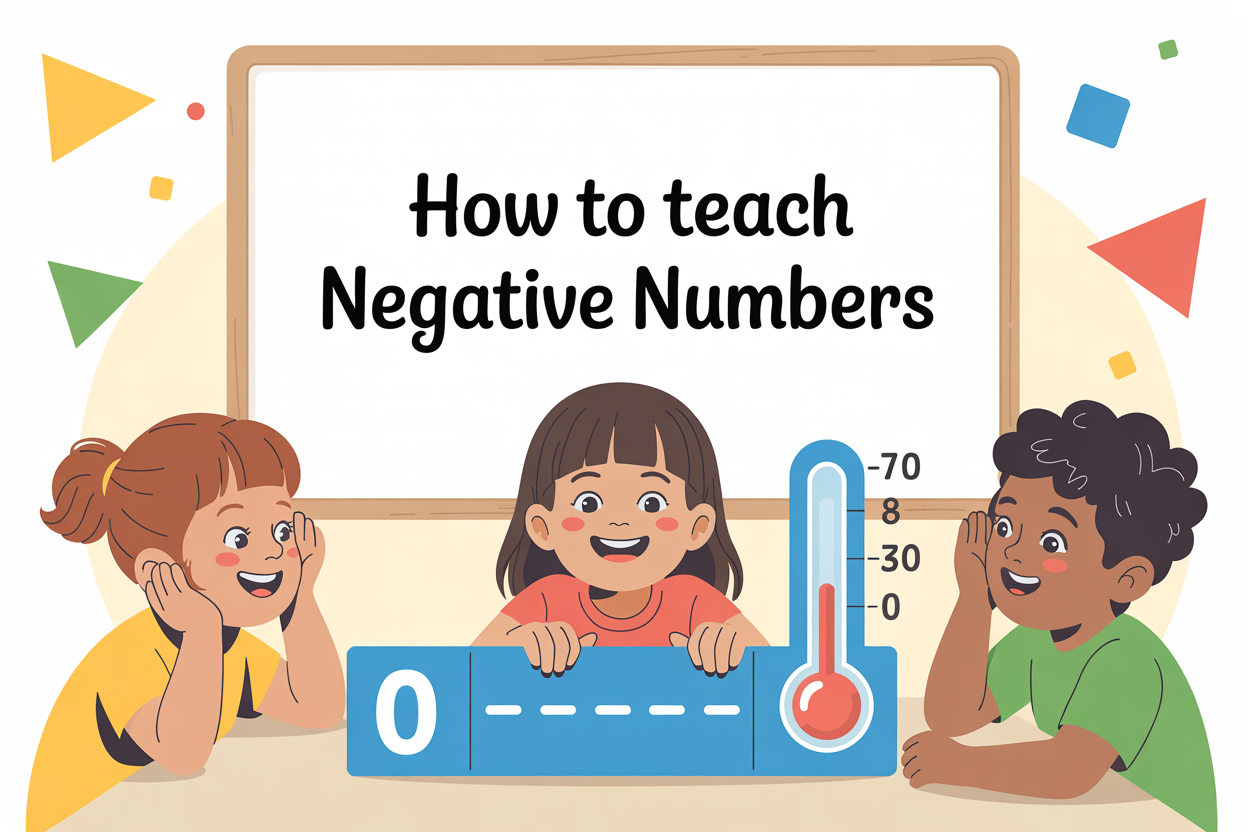
Number lines are equally powerful. Physical number lines (floor-sized ones kids can walk on, or desk-sized ones they can point to) help with counting, skip counting, addition, subtraction, and understanding negative numbers. The UK Department for Education recommends number lines as one of the primary representations for teaching arithmetic in primary schools.
You can make a ten frame at home with a piece of paper and a marker in about 30 seconds. Use coins, buttons, or small toys as counters. It’s one of those tools where the simplicity is the point. Kids focus on the math instead of fiddling with complicated materials.
Dice and playing cards: tools you already own
You probably have a pair of dice and a deck of cards somewhere in the house. These are legitimate math manipulatives that kids don’t associate with school, which gives them a huge advantage in terms of engagement.
Dice games cover addition (roll two dice and add), multiplication (roll and multiply), probability (what’s the chance of rolling a 6?), and mental math speed. Playing cards work for number recognition, comparing numbers (War), making 10 (Go Fish for pairs that add to 10), and even basic algebra with older kids.
A study from the American Psychological Association found that game-based math practice improved both performance and attitudes toward math. Kids who played number games at home for just 15 minutes a few times per week showed measurable improvement. The key? It doesn’t feel like practice. It feels like a game.
📝 Good to know
Multi-sided dice (d10, d12, d20) expand the range of games you can play. A pair of 10-sided dice turns simple addition into two-digit number practice. You can find sets at game stores or online for a couple of dollars.
Digital math manipulatives: when screens help
Physical manipulatives are ideal, but digital versions have real advantages too. They’re free, they don’t get lost under the couch, and some offer features that physical tools can’t (like instantly generating new problems or tracking progress).
MathSpark generates AI-powered math worksheets for kids in grades 1-9 in about 10 seconds. It follows the Pythagoras Exams methodology and covers the Greek school curriculum, making it especially useful for families in Greece or anyone looking for structured practice. The worksheets complement physical manipulatives nicely: use blocks to understand a concept, then use MathSpark to practice it with fresh problems.
Toy Theater offers free virtual manipulatives including base ten blocks, pattern blocks, and number lines. The Math Learning Center provides a suite of free apps with virtual versions of most physical manipulatives. Both work well on tablets, which makes them accessible during car rides or waiting rooms.
Choosing the right manipulatives by grade level
Not every manipulative fits every age. Here’s a practical breakdown of what works when:
Pre-K and Kindergarten: Counting bears, two-color counters, ten frames, Unifix cubes, simple dice games. Focus on counting, sorting, patterns, and number recognition.
Grades 1-2: Base ten blocks, Unifix cubes, number lines, ten frames, pattern blocks, playing cards. Focus on addition, subtraction, place value, and early geometry.
Grades 3-4: Base ten blocks, fraction tiles, pattern blocks, geoboards, multi-sided dice. Focus on multiplication, division, fractions, area, and perimeter.
Grades 5-6: Fraction tiles, fraction circles, geoboards, algebra tiles, protractors. Focus on fraction operations, decimals, geometry, and pre-algebra concepts.
The Understood.org guide to math manipulatives offers additional grade-specific recommendations, particularly for children with learning differences like dyscalculia.
How to use manipulatives effectively at home
Buying manipulatives is step one. Using them well is step two. Here are some guidelines from math educators that will help you get the most out of these tools:
Let kids explore first. Before assigning any problems, give your child time to play with the materials. Build, stack, sort, create. This free exploration phase reduces novelty distraction when it’s time to focus on math.
Ask questions, don’t lecture. “How many cubes do you have? What happens if you add three more? Can you show me a different way?” Questions keep kids thinking. Lectures make them zone out.
Connect to the abstract. After your child solves a problem with blocks, write the number sentence (3 + 4 = 7) alongside it. This bridges the gap between concrete understanding and symbolic math, which is the whole point of the CRA framework endorsed by the Education Endowment Foundation.
Phase them out gradually. Manipulatives are training wheels. The goal is for kids to eventually work without them. But there’s no rush. If your fifth grader still wants to use fraction tiles, that’s fine. Understanding trumps speed every time.
⚠️ Disclaimer
This article is for informational purposes and reflects general math education guidance as of February 2026. Every child learns differently. If your child has specific learning needs, consult with their teacher or a learning specialist for personalized recommendations.
Frequently asked questions
What age should kids start using math manipulatives?
Children can start as early as age 3 with simple counting objects like bears or buttons. Toddlers naturally learn through touch, so handing them objects to count and sort is age-appropriate math. Formal manipulatives like base ten blocks become useful around age 5-6.
Are virtual manipulatives as effective as physical ones?
Research suggests both are effective, with physical manipulatives having a slight edge for younger children who benefit from tactile feedback. Virtual manipulatives work well as a supplement, especially for practice and for kids who are already comfortable with the concepts. A meta-analysis in the ERIC database found comparable learning outcomes for students using either format.
How much do math manipulatives cost?
Basic sets are affordable. A bag of counting bears costs $5-10, Unifix cubes around $10-15, and a set of base ten blocks $10-20. Fraction tiles and geoboards are typically under $15 each. You can also make many manipulatives at home using household items like dried beans, buttons, coins, or paper cutouts.
My child’s teacher doesn’t use manipulatives. Should I worry?
Not necessarily, but using them at home can only help. Some teachers rely more on visual models (drawings and diagrams) rather than physical objects, which is another valid approach within the CRA framework. If your child is struggling, introducing manipulatives at home gives them an extra way to understand the material.
When should my child stop using manipulatives?
There’s no hard cutoff. Kids naturally phase them out as concepts become automatic. If your child can solve problems mentally or on paper with confidence, they probably don’t need the physical tools anymore. But there’s no harm in using them longer. Even high school students occasionally benefit from physical models when tackling new abstract concepts.