Real-Life Math for Kids: 4 Everyday Activities
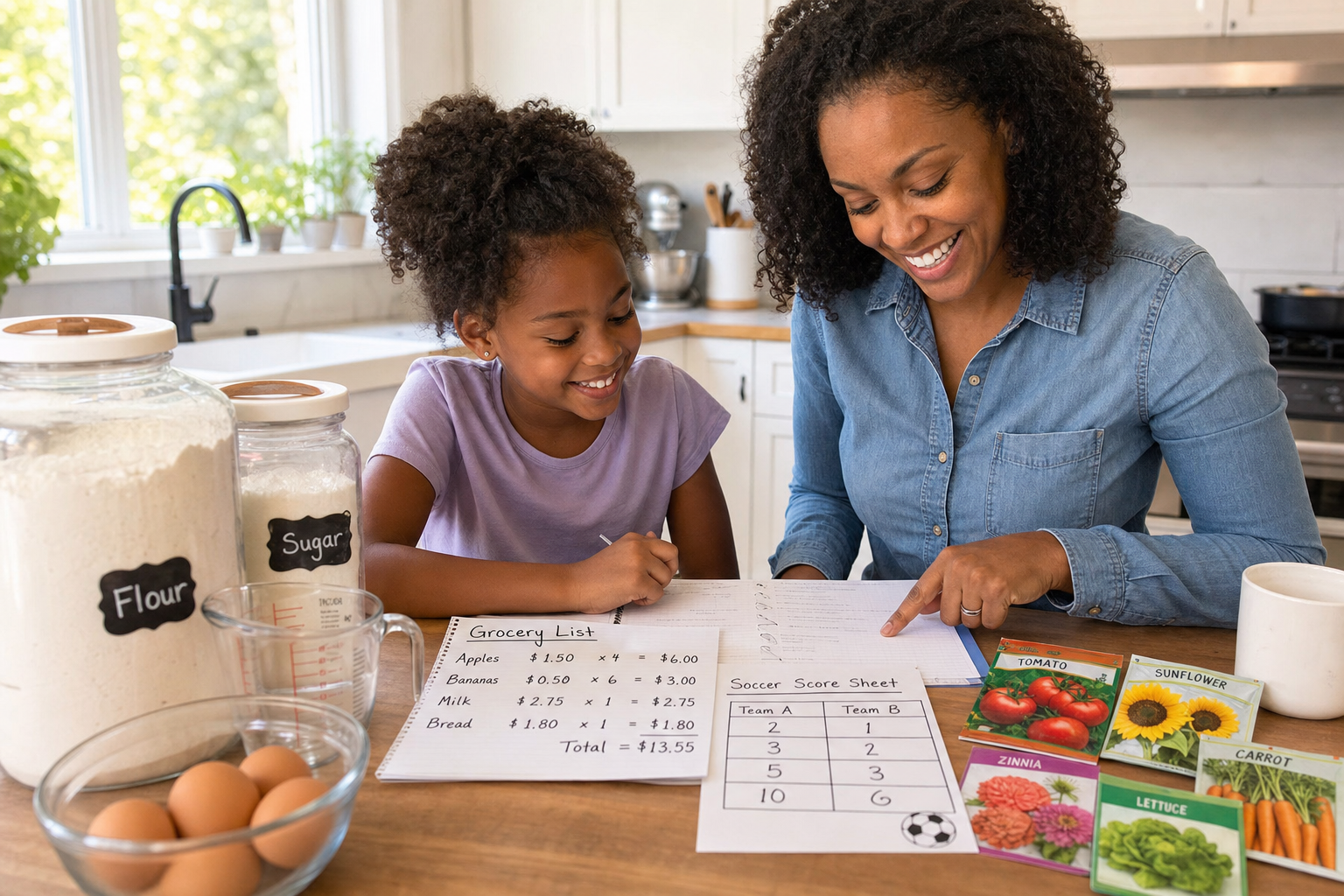
Real-life math for kids works because it turns numbers from a school subject into something your child can touch, taste, spend, measure, grow, and cheer for. If homework has become a nightly negotiation, the fastest reset is often not another lecture. It is asking your child to halve a pancake recipe, compare two cereal prices, measure a garden pot, or calculate a football shooting percentage. That is still math, but it feels like life. Organizations such as the National Council of Teachers of Mathematics have long emphasized reasoning, problem solving, and mathematical connections, and everyday routines are where those connections become obvious.
The goal is not to replace school lessons. The goal is to make school lessons less abstract. A child who has poured half a cup of milk, estimated a grocery total, counted seed spacing, and tracked a basketball score has mental pictures to attach to fractions, decimals, measurement, and percentages. When you later open a worksheet, those ideas are no longer floating symbols. They have a memory attached to them. For follow-up practice, MathSpark worksheet generator can turn that same real-world moment into a short grade-appropriate worksheet in about 10 seconds, which keeps the learning connected instead of random.
📺 Video Guide
✓ Why Everyday Math Sticks
- ✓ It gives abstract concepts a physical anchor
- ✓ It lowers pressure because the activity has a purpose
- ✓ It builds language: more, less, half, double, equal, estimate
- ✓ It creates natural repetition without turning home into school
Real-Life Math for Kids Starts in the Kitchen
Cooking is the easiest place to begin because the math is visible and forgiving. A recipe uses fractions, ratios, measurement, multiplication, division, time, temperature, and sequencing. Ask your child to find half of 1 cup, double 3 tablespoons, or decide whether a 20-minute bake time is closer to a quarter hour or half an hour. The Northern Illinois University Math Matters examples of everyday math include cooking because it makes proportional thinking concrete: ingredients change, but relationships stay the same.
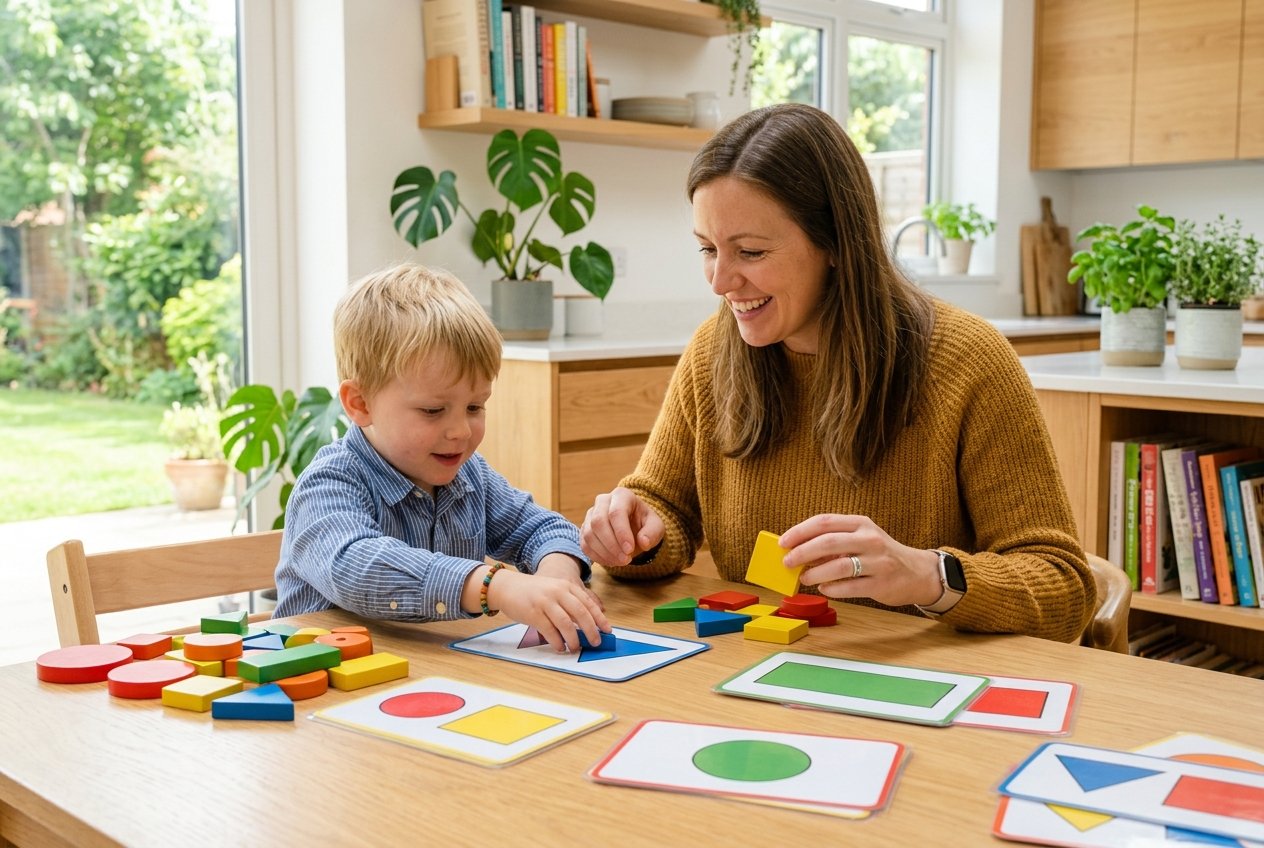
For younger children, keep it sensory. Let them count spoonfuls, compare full and empty cups, notice which bowl has more, and arrange muffin cups into equal rows. For children in grades 3 to 5, ask them to double or halve a simple recipe. For middle schoolers, scale a recipe for 4 people to 6 people, then discuss why every ingredient must change by the same factor. That is ratio reasoning, but it does not need to be announced with scary vocabulary.
This also helps children who freeze when they see fractions on paper. The American Psychological Association notes that anxiety around math can lead to avoidance, and low-pressure activities help parents change the emotional tone. In the kitchen, a mistake is not a red mark. It is a pancake that is too thick, a sauce that needs more water, or a batch of cookies that teaches why measurement matters. That feedback is immediate, practical, and less personal.
💡 Pro Tip
Use “notice and wonder” questions instead of mini-lectures: What do you notice about these two measuring cups? What do you wonder will happen if we double only the flour?
Shopping Turns Arithmetic Into Decision-Making
Shopping is where arithmetic becomes judgment. Children can estimate totals, compare unit prices, calculate discounts, subtract from a budget, and decide whether a bigger pack is really better value. The point is not to make them responsible for the family budget. The point is to let them see that math helps people make choices. That practical purpose is one reason NAEYC early math resources highlights early math as part of everyday learning, not only formal instruction.
Start with a small mission: “We have 10 euros for fruit. Can we buy apples, bananas, and strawberries without going over?” Younger children can count items and compare prices. Older children can round each price to the nearest euro, keep a running estimate, and then compare the estimate with the receipt. Middle schoolers can calculate price per kilogram, discount percentages, or whether a loyalty offer is actually worth it.
If your child struggles with multi-step problems, shopping is also a bridge to word problems. A word problem often feels artificial because the child must imagine the situation and calculate at the same time. In the store, the situation is already there. The question “Which one is cheaper per serving?” has a shelf, a label, a packet, and a decision attached. That makes the mental load lighter.
📝 Important Note
Do not turn every supermarket trip into a quiz. Pick one small math job per trip. Stop while the child is still successful, not when everyone is tired.
Gardening Makes Measurement and Geometry Visible
Gardening is brilliant for children who need to move while they think. A pot has diameter and depth. A raised bed has length, width, area, and perimeter. Seeds need spacing. Watering schedules use time and intervals. Plant growth turns data into a living graph. If your child has only seen area as boxes on a worksheet, measuring a real garden bed can make the formula feel less arbitrary.
For ages 5 to 7, ask children to count seeds, sort leaves by size, compare stems, and make simple patterns. For ages 8 to 11, give them a ruler and ask how many plants fit if each needs 15 centimeters of space. For older children, ask them to plan the area of a rectangular bed, estimate bags of soil, or graph plant height once a week. The The Math Learning Center offers hands-on math resources that pair well with this kind of visual thinking.
This connects naturally to building number sense. Number sense grows when children repeatedly compare quantities, estimate before measuring, and check whether an answer makes sense. A child who predicts that 20 seedlings will fit in a tiny pot learns quickly that numbers need context. That is exactly the kind of reasoning we want before formal algebra arrives.
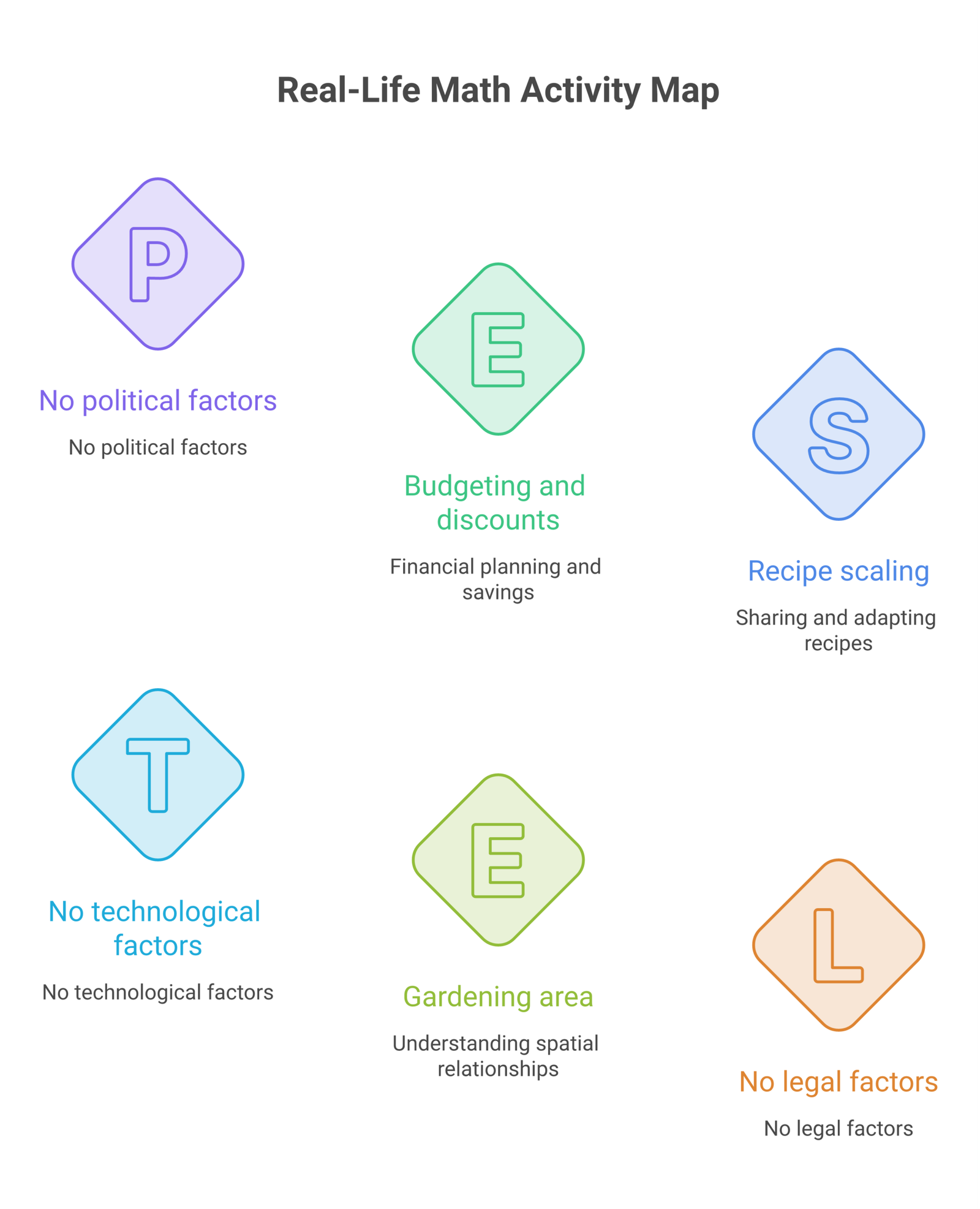
Sports Make Percentages and Data Feel Worth Knowing
Sports can turn reluctant learners into data analysts. A child who loves football, basketball, swimming, gymnastics, or running already cares about scores, time, distance, rankings, attempts, and improvement. You can ask: What percentage of shots went in? How many seconds faster was today’s lap? If a team won 7 out of 10 games, what is the win rate? Suddenly percentages are not a worksheet topic. They are a way to understand performance.
This is also a good moment to introduce fair comparison. A player who scores 8 goals in 20 games and another who scores 6 in 10 games cannot be compared by goals alone. Children need ratios, averages, and context. The OECD PISA assessment work repeatedly shows that mathematical literacy includes applying knowledge in real-world contexts, and sports are one of the most natural contexts families already have.
For quick practice, link the sports conversation to quick math games. Waiting rooms, car rides, and halftime breaks are perfect for mental math: “If we need three more points to tie, what combinations could get us there?” or “If the match started at 5:15 and lasts 90 minutes plus 10 minutes break, when might it end?” These small questions build fluency without a battle.
✓ Four Parent Scripts That Work
- ✓ “Estimate first, then we will check.”
- ✓ “Show me another way to think about it.”
- ✓ “What would make this answer impossible?”
- ✓ “Let’s use a quick worksheet to practice the same idea.”
How to Turn One Activity Into a Simple Worksheet
The best real-life math for kids ends with reflection. After cooking, shopping, gardening, or sports, ask your child to explain what changed, what stayed the same, and how they knew. Then write three to five practice questions that copy the structure of the activity. If you doubled a recipe, make one question about doubling. If you compared prices, make one question about unit cost. If you measured plant spacing, make one question about equal intervals.
This is where MathSpark worksheet generator is useful for busy parents. Instead of inventing twenty problems from scratch, you can type the skill, grade, and difficulty, then generate a short worksheet based on the same idea. Keep it small: five confident questions are better than thirty exhausted ones. The Pythagoras Exams-style approach values reasoning and step-by-step confidence, so the worksheet should feel like a continuation of life, not a punishment after fun.
If you want extra free practice resources, Khan Academy, PBS Parents, and NRICH all provide strong math activities, but the parent move matters more than the website. Choose one concept, connect it to a real action, and let the child explain their thinking. That explanation is often where the learning becomes visible.
A Weekly Plan Parents Can Actually Keep
Monday can be kitchen math: measure, halve, double, and compare. Wednesday can be shopping math: estimate a small basket or compare two prices. Friday can be sports or movement math: track scores, time a run, or calculate a percentage. Weekend can be gardening, crafts, or home projects. Ten minutes is enough when the task is focused and the tone is calm.
For children with math anxiety, shorter is kinder. The American Psychological Association recommends paying attention to avoidance, negative self-talk, and strong emotional reactions. If your child shuts down, do not push through just to finish. Pause, validate the feeling, and return later with a smaller version of the task. Confidence grows from successful repetitions, not heroic battles at the kitchen table.
Technology can support the plan when it stays purposeful. Common Sense Education reviews math apps and sites, but screen time works best when it follows a real-life conversation. Let the child first measure, compare, estimate, or count in the world. Then use an app or worksheet to practice the same idea. That sequence keeps math grounded.
⚠️ Disclaimer
This article was updated in June 2026 for general parent guidance. It is not a diagnostic or tutoring plan. If your child shows persistent distress, major skill gaps, or possible signs of a learning difference such as dyscalculia, speak with the classroom teacher or a qualified specialist.
Frequently Asked Questions
What age is best for real-life math activities?
You can start in preschool with counting, sorting, and comparing. Older children can handle fractions, percentages, rates, and data using the same everyday routines.
How often should we do real-life math at home?
Three short moments per week is enough for most families. Consistency matters more than duration.
Should I correct every mistake immediately?
No. Ask your child to estimate, explain, and check. If the mistake matters to the activity, let the real-world result help them revise.
Can real-life math replace worksheets?
It should not replace all written practice. It makes worksheets more meaningful because the child has an experience to connect with the symbols.
What if my child says they hate math?
Start with a non-school activity they already like, such as cooking or sports, and keep the math question tiny. The first goal is safety and confidence.